Homeopathy looks at health as a whole

An individual approach that considers physical symptoms, emotional wellbeing and the wider patterns behind health.

What is homeopathy

Homeopathy is a holistic system of medicine based on the principle of “like cures like”. It considers the individual as a whole, including physical symptoms, emotional wellbeing and the wider health context. Treatment is always personalised, as each individual expresses illness in a unique way.

Homeopathic globules in a stone bowl and spilling from a glass bottle

How homeopathy works

Homeopathic remedies are prepared from natural substances through a process of repeated dilution and succussion. Remedies are selected individually according to each person’s particular pattern of symptoms, their overall health and the way they experience them.

Amber bottles of Arnica montana and Belladonna with scattered globules

How it can be used

Homeopathy can be used for both acute and long term conditions. In acute situations, treatment focuses on the specific way symptoms present in each individual. In chronic conditions, the approach is more detailed and considers physical symptoms alongside emotional wellbeing, individual responses and longer term patterns.
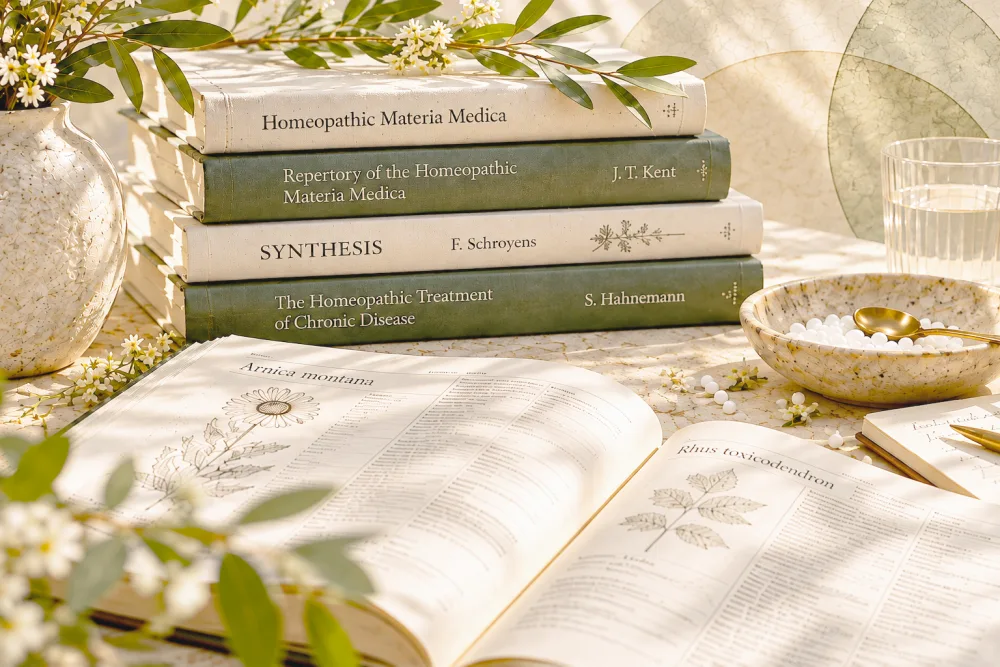
Homeopathic materia medica and repertory books with an open reference book

Homeopathy does not replace conventional medicine, but can be used alongside it as a complementary approach.
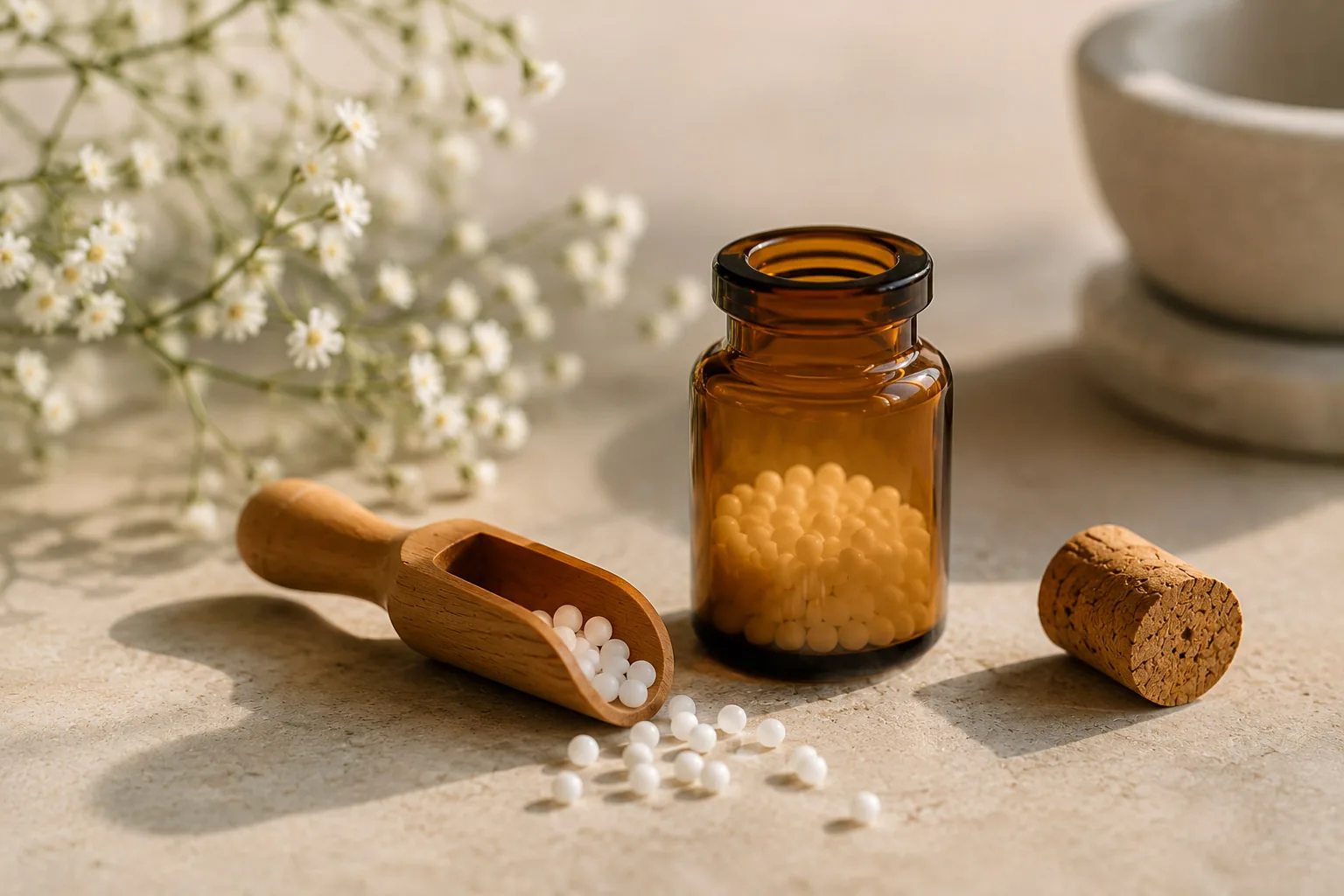
Homeopathy can be used at every stage of life, from childhood through adulthood, including during pregnancy.

Frequently Asked Questions

Are there any side effects?

Homeopathic remedies have no known side effects and can be used by people of all ages. As treatment is individual, responses can vary from person to person.

How quickly will I see results?

This really depends on the individual and on what we are treating. Acute problems can sometimes respond very quickly, while long term or more complex conditions usually need more time and a gradual approach.

Is it suitable for children?

Yes. Homeopathy can be used from infancy and is commonly used with children. Treatment is always individual and takes into account not only the symptoms, but also the child’s overall health and individual responses.

Can I use homeopathy alongside conventional medication?

Yes. Homeopathy can be used alongside conventional medication and medical treatment. It does not replace conventional medical care, but can be used as a complementary approach alongside it.

Homeopathy in Context

History and origins of homeopathy

Homeopathy was developed at the turn of the eighteenth and nineteenth centuries by the German physician and chemist Samuel Hahnemann (1755–1843). Looking for a gentler approach to the often aggressive medical treatments of his time, he developed the principle of “similia similibus curentur”, or “like cures like”.

His observations and experiments formed the foundations of homeopathic philosophy, later described in his work Organon of the Healing Art.

During the nineteenth century, homeopathy spread across Europe and America, with hospitals, professional societies and schools established in a number of countries. It developed into an organised system of medicine with practitioners and teaching institutions in many parts of the world. Today, homeopathy continues to have particularly strong traditions in countries including Britain, France, Germany, Switzerland and India.

Scientific research

There is a substantial body of published research on homeopathy in peer reviewed scientific journals investigating its use across a range of health conditions.

Research includes randomised controlled trials, observational studies and systematic reviews, as well as laboratory research exploring the properties of highly diluted substances. Many studies have reported positive findings, while others have produced inconclusive or conflicting results.

One challenge in researching homeopathy is its individualised approach. People with the same diagnosis may receive different remedies depending on their unique symptoms and overall health pattern, making it different from many conventional research models.

Homeopathy remains an active area of scientific research, with ongoing studies exploring its clinical effects and how it may work.

For an overview of current research and published studies, please visit the Homeopathy Research Institute.

Slavka Kubatova

If you would like to explore whether this approach could be right for you, you can book a free 15 minute call with me.

Book a Free Discovery Call